Lita Albuquerque
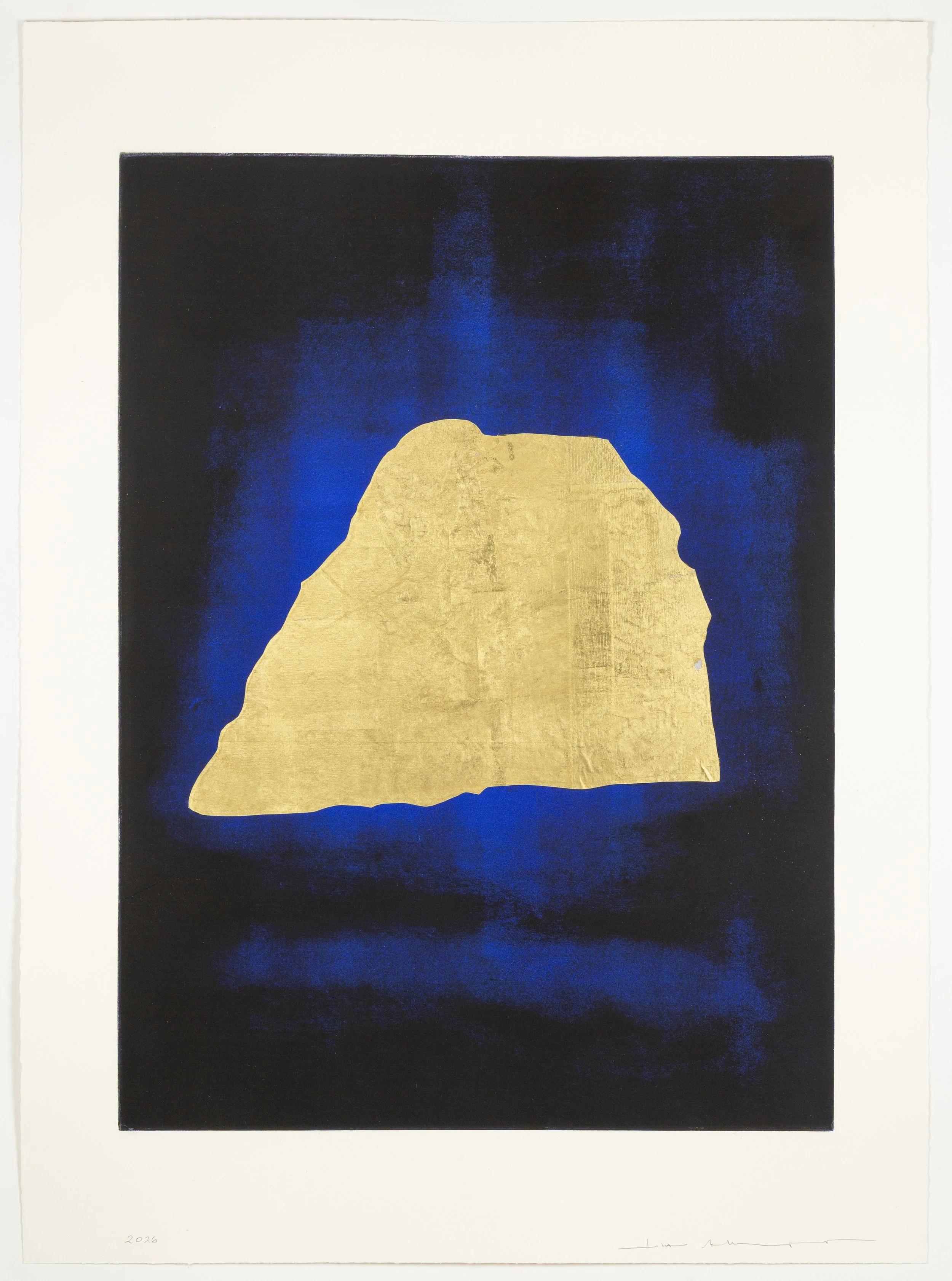
Cosmic Levitation 5, 2026
Monotype from a steel matrix with 24-karat gold leaf and pigment on paper
28 x 38 in. (71.1 x 96.5 cm)
1 of 1
Published by Farrington Press
$9,000
Lita Albuquerque’s Cosmic Levitations
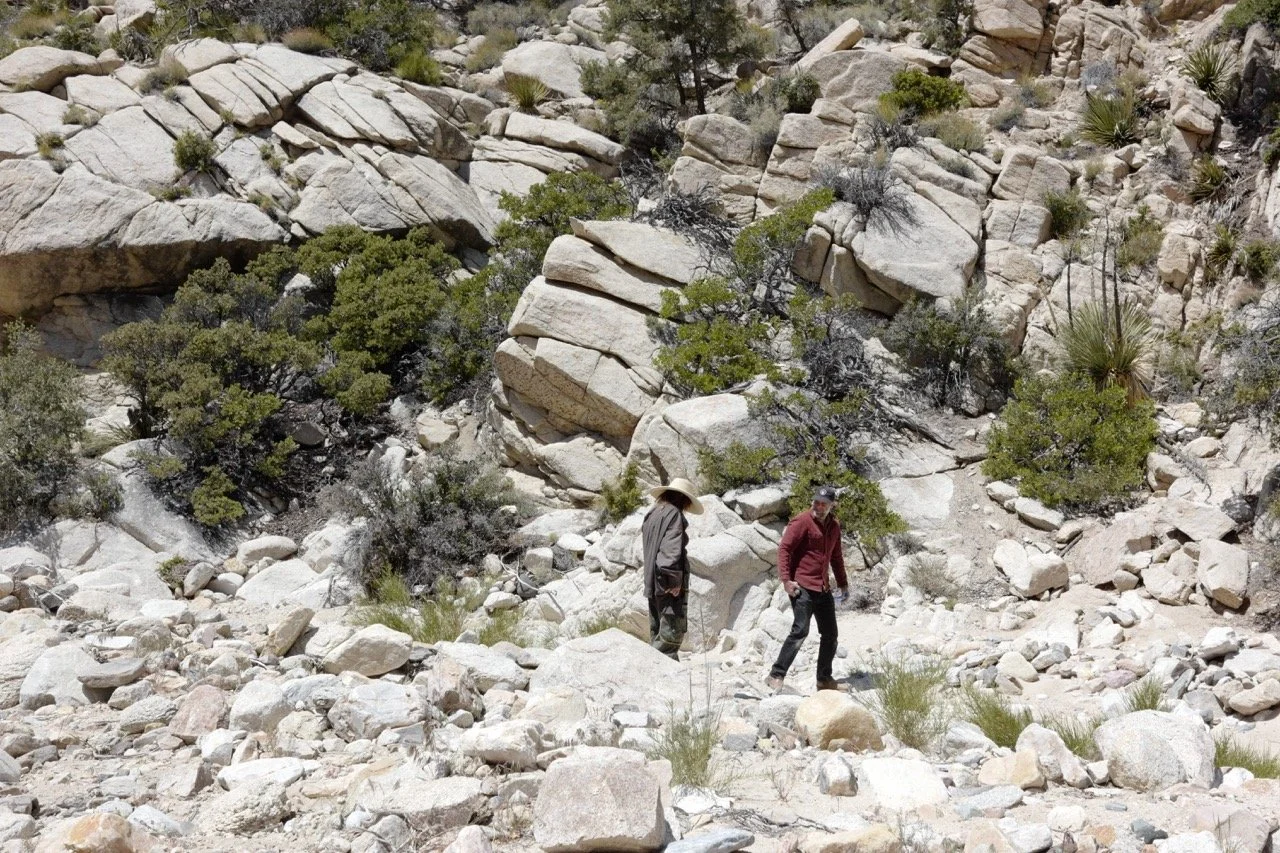
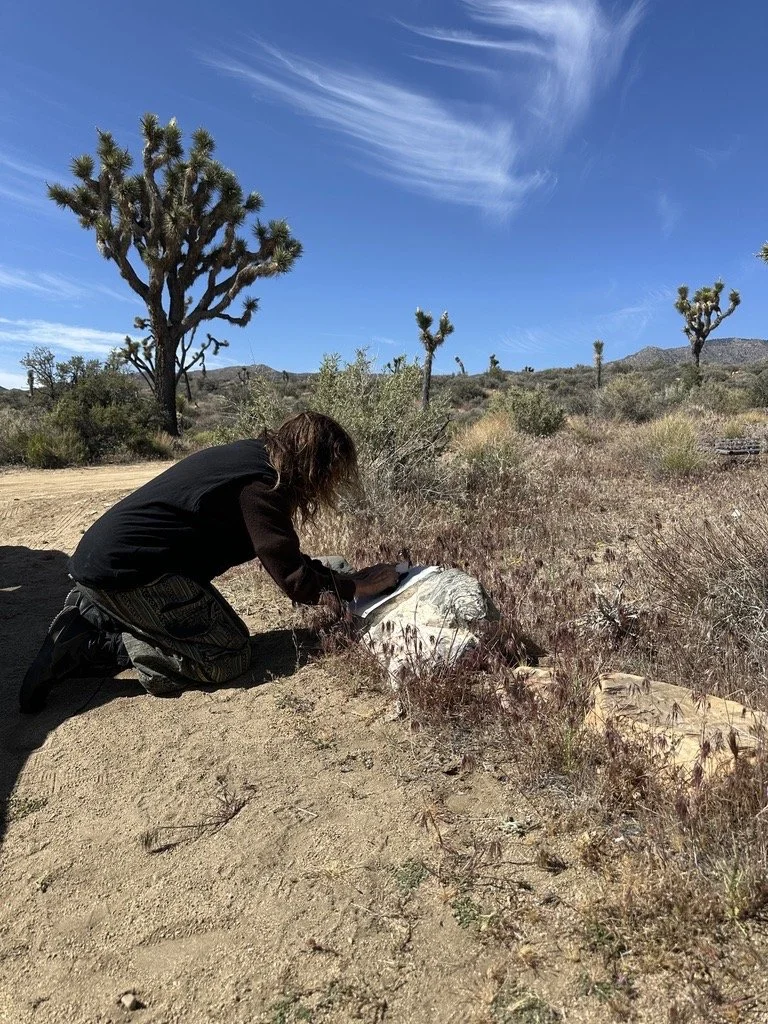
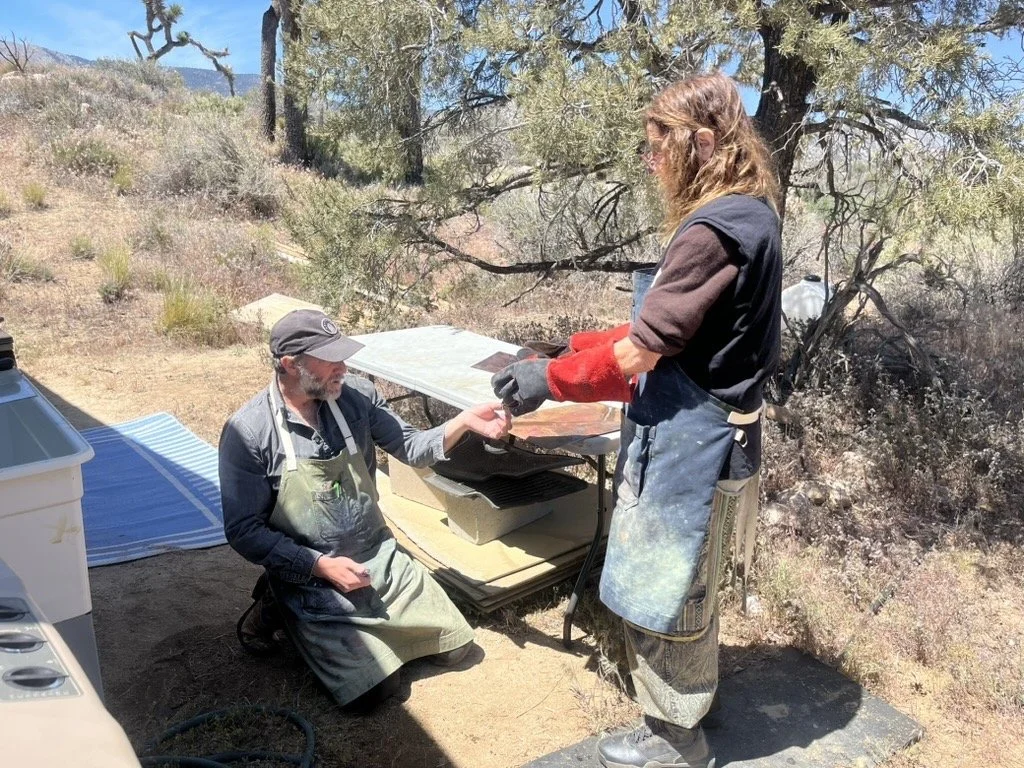
The moon slips out from behind a craggy peak, leaking light over the serrated ridgeline. The midnight sky’s velvet firmament cloaks the boundlessness of space. Lita Albuquerque’s luminous monoprints, created in collaboration with Farrington Press, a studio and observatory nestled in the mountainous wilderness between the high desert and alpine forest, channel the ethereal atmosphere of the ecotonal landscape in which they were made. Dusted with gold leaf and powdered pigment and formed from a constellation of direct and residual marks, the prints feature incandescent, monolithic shapes that hover over rich, obsidian grounds, a nod to the canyon’s nocturnal hues. Anchoring the works, these central abstract forms—golden voids evoking a pebble, a mountain, or the moon—read as microscopic and telescopic at once, reflecting Albuquerque’s enduring interest in mineral and cosmic scales.
The prints’ material qualities echo their geological surroundings and celestial bearings. For example, the compositions’ biomorphic shapes trace the contours of stones found in the landscape. Diffuse clouds of pigment suggest distant nebulae. Beyond these formal correspondences, Albuquerque’s incorporation of gold leaf carries specific symbolic weight. Its use not only harks back to the mining history of this area of Southern California, where prospectors first identified valuable gold deposits in remote, arid canyons in the mid-19th century, but also references ancient cosmic processes that predate the formation of the Earth itself. Billions of years ago, extreme astronomical phenomena such as neutron star mergers and magnetar flares generated the intense conditions needed to birth gold, which dispersed through deep space and eventually commingled with the gas clouds that formed our solar system. While the Earth’s nascent molten core absorbed and retained most of the element, later asteroid impacts injected fresh gold into the crust and mantle, where hydrothermal fluids ferried it upward through a network of veins and fissures. Erosion eventually exposed the gold. Here, delicate handwork translates it to paper. In Albuquerque’s prints, then, the presence of gold leaf functions as a metaphysical sign of intimate and infinite proportions, indexing both the hands of the artist and printer—their relationship an alchemical collaboration—and the enigmatic material history of the known universe itself.
-Jessica Simmons-Reid
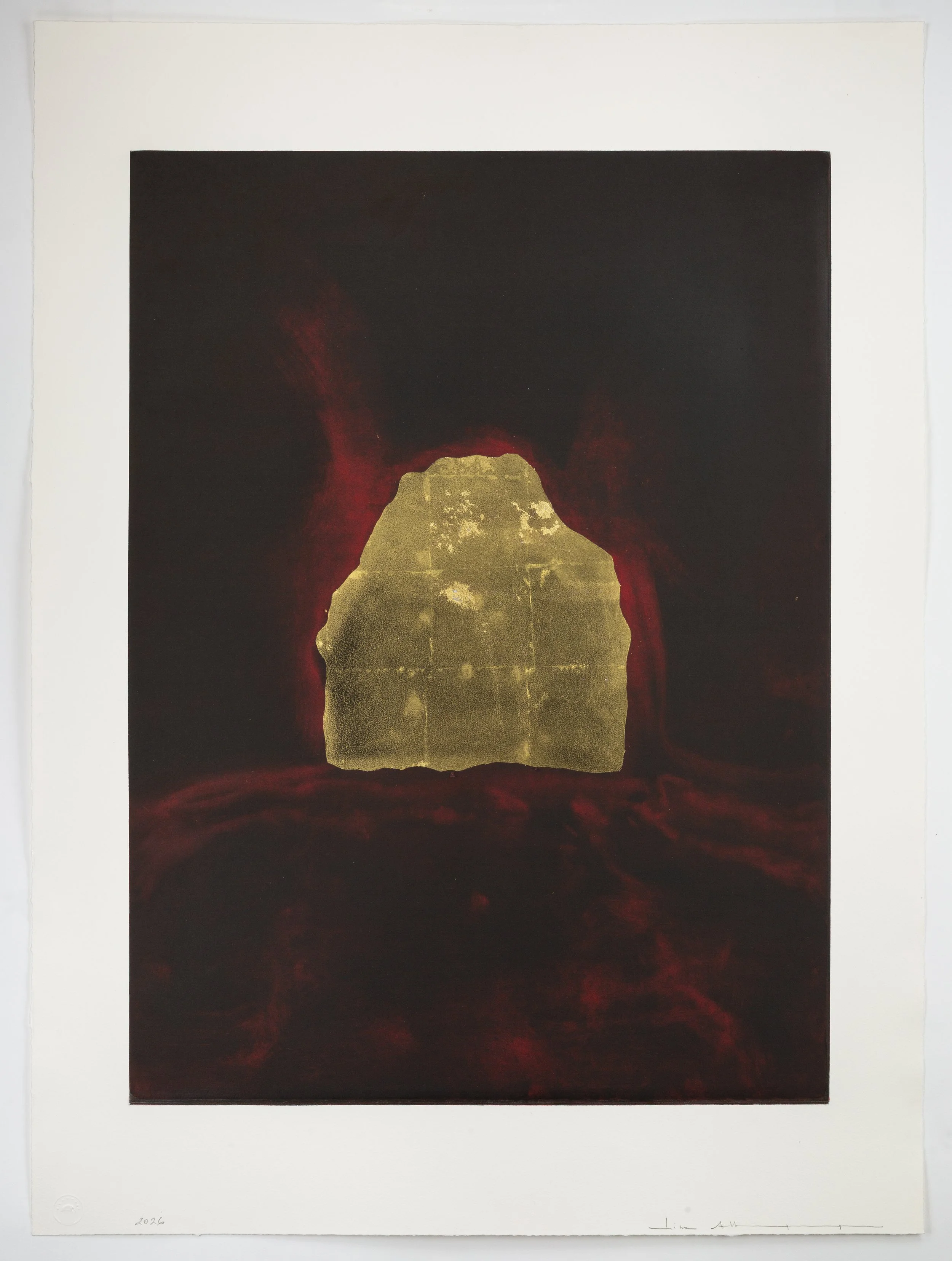
Cosmic Levitation 6, 2026
Monotype from a steel matrix with 24-karat gold leaf and pigment on paper
28 x 38 in. (71.1 x 96.5 cm)
1 of 1
Published by Farrington Press
$9,000
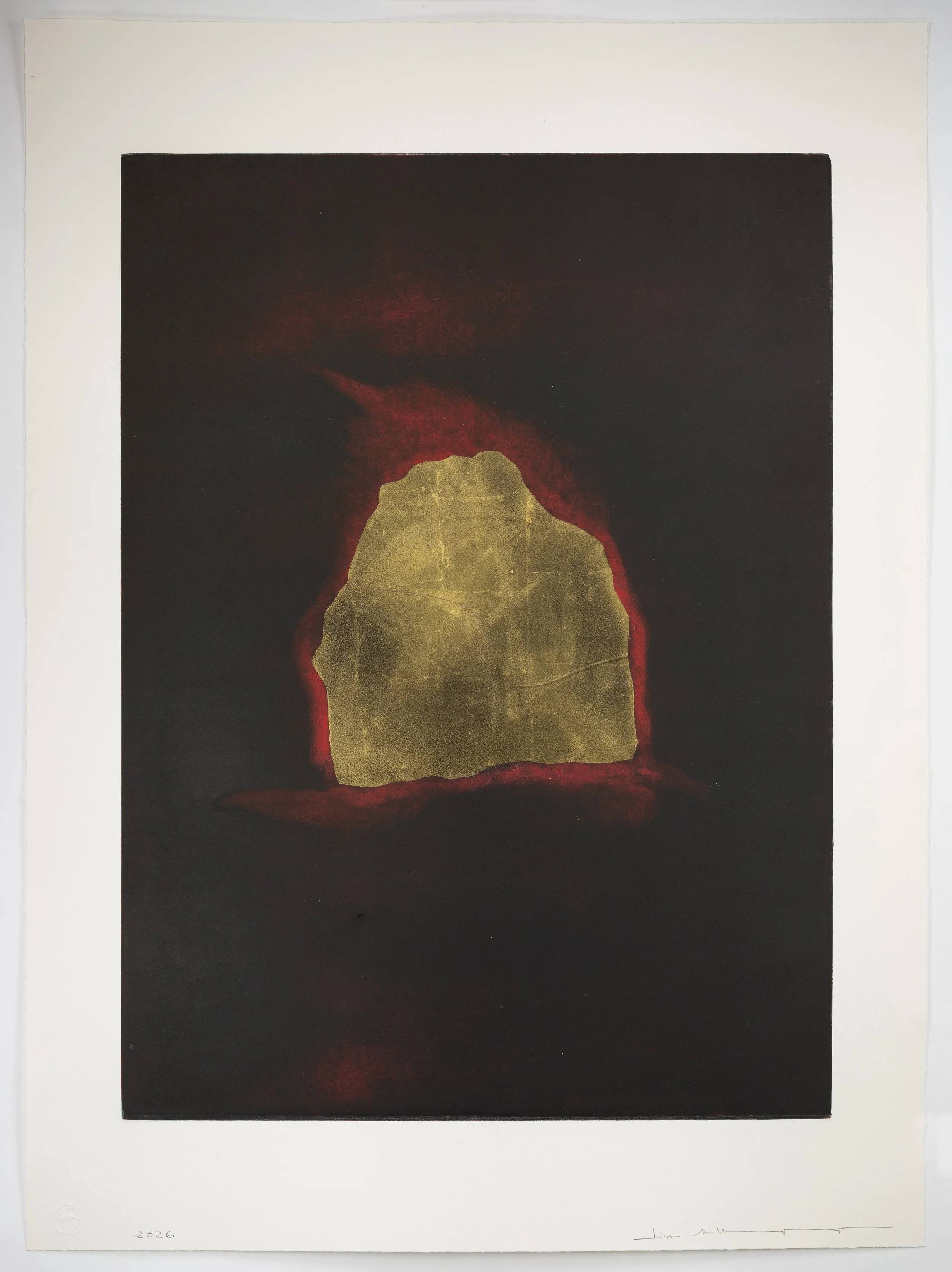
Cosmic Levitation 4, 2026
Monotype from a steel matrix with 24-karat gold leaf and pigment on paper
28 x 38 in. (71.1 x 96.5 cm)
1 of 1
Published by Farrington Press
$9,000
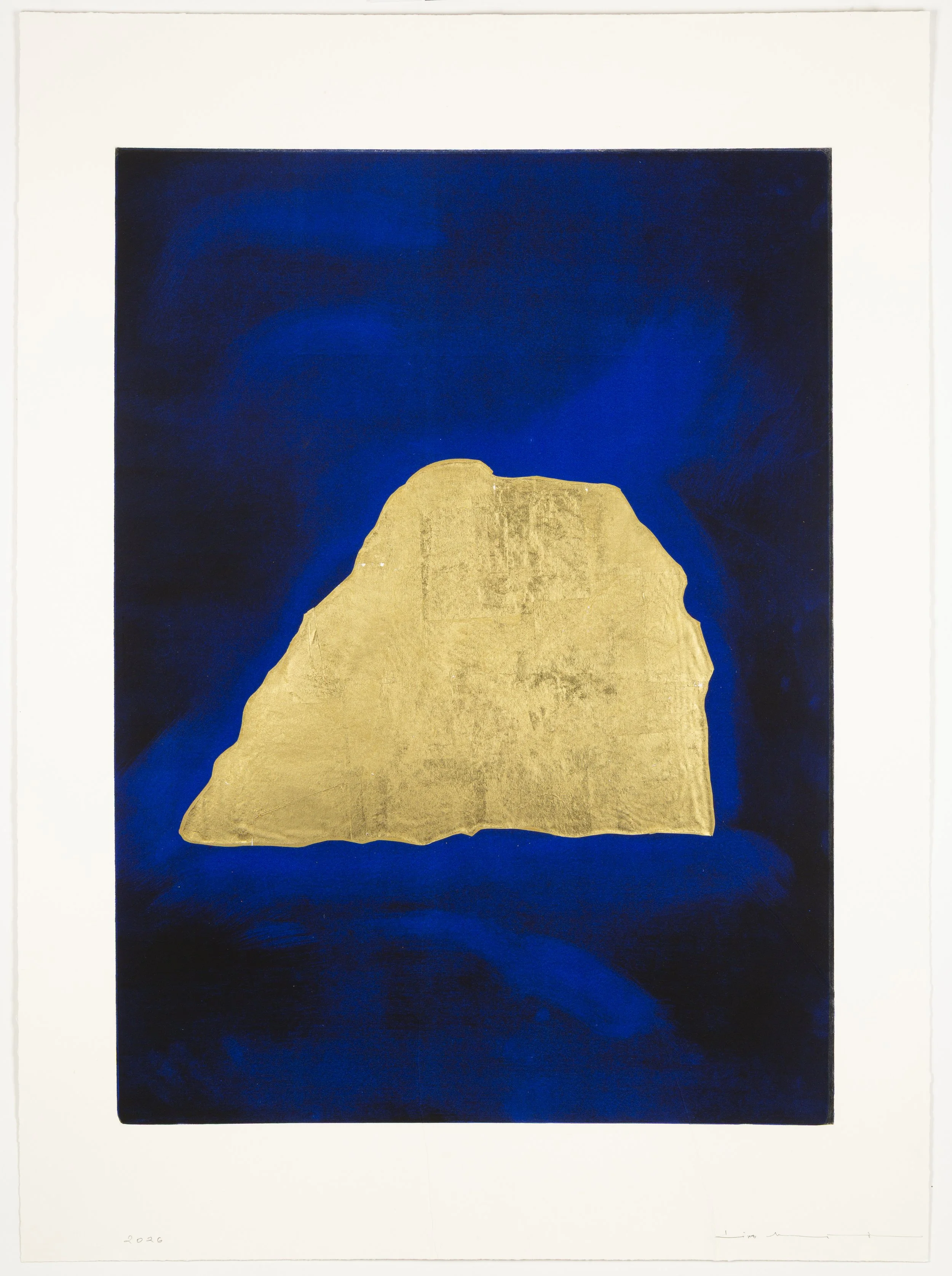
Cosmic Levitation 2, 2026
Monotype from a steel matrix with 24-karat gold leaf and pigment on paper
28 x 38 in. (71.1 x 96.5 cm)
1 of 1
Published by Farrington Press
$9,000
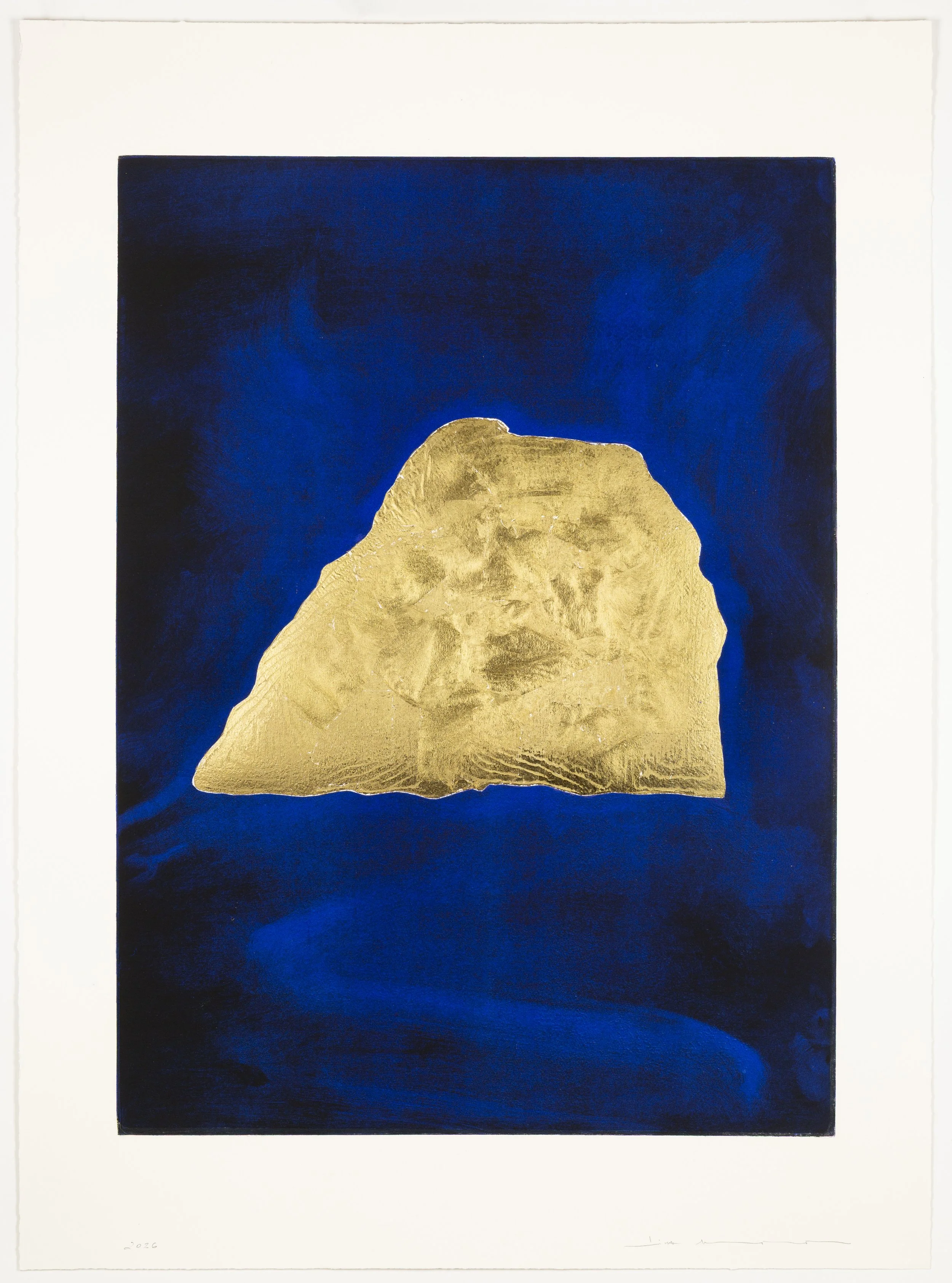
Cosmic Levitation 3, 2026
Monotype from a steel matrix with 24-karat gold leaf and pigment on paper
28 x 38 in. (71.1 x 96.5 cm)
1 of 1
Published by Farrington Press
$9,000
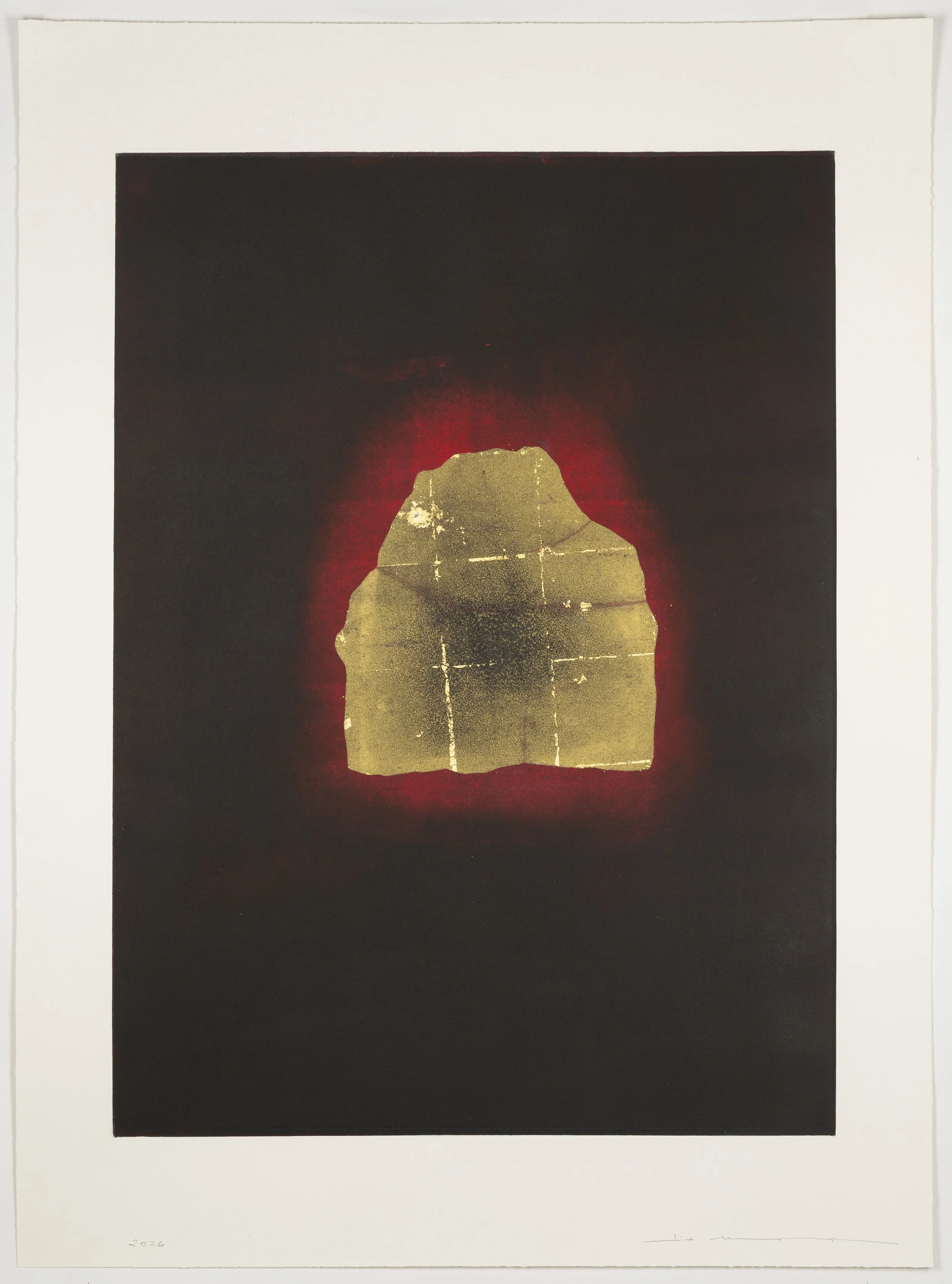
Cosmic Levitation 1, 2026
Monotype from a steel matrix with 24-karat gold leaf and pigment on paper
28 x 38 in. (71.1 x 96.5 cm)
1 of 1
Published by Farrington Press
$9,000
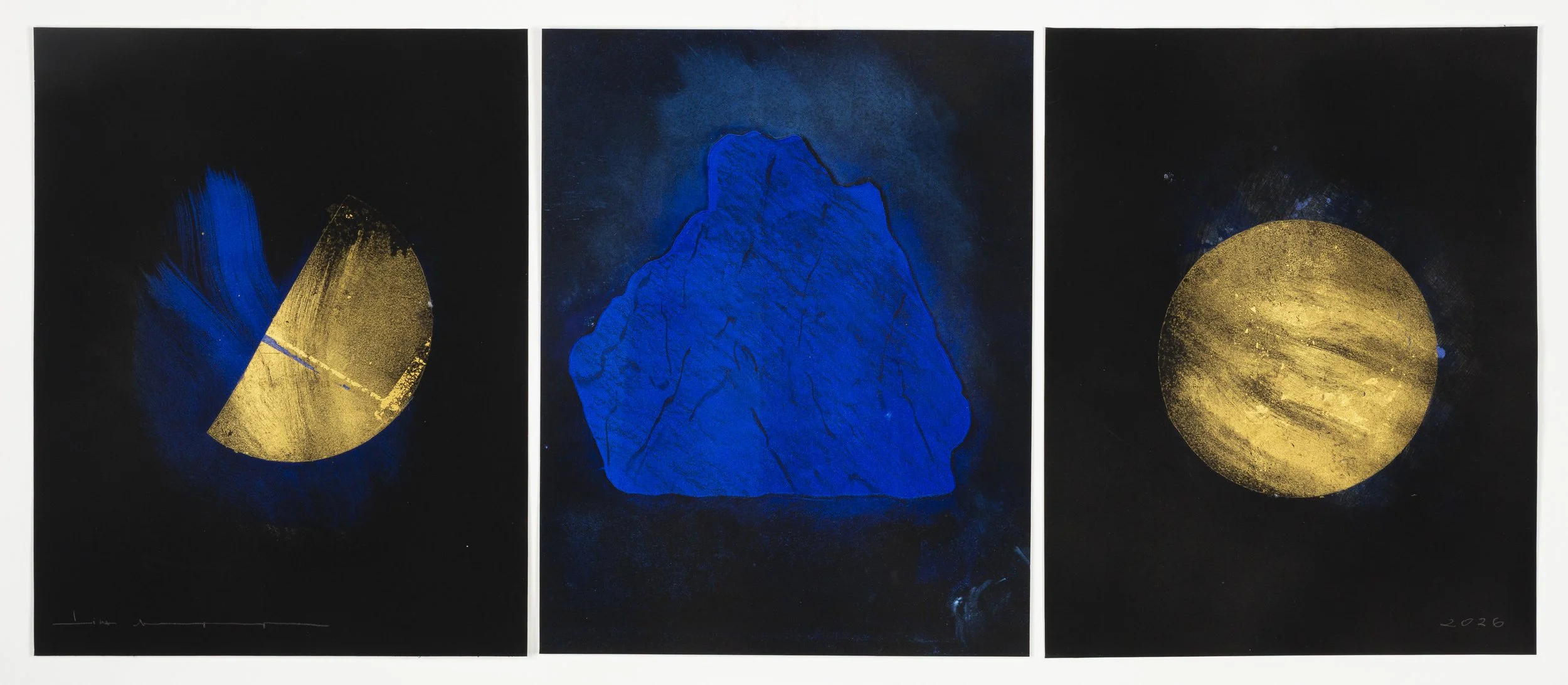
Cosmic Levitation - Apprehended, 2026
Monotype triptych with 24-karat gold leaf and pigment on paper
10 7/8 x 13 7/8 in. (27.6 x 35.2 cm) each sheet
1 of 1
Published by Farrington Press
$5,000
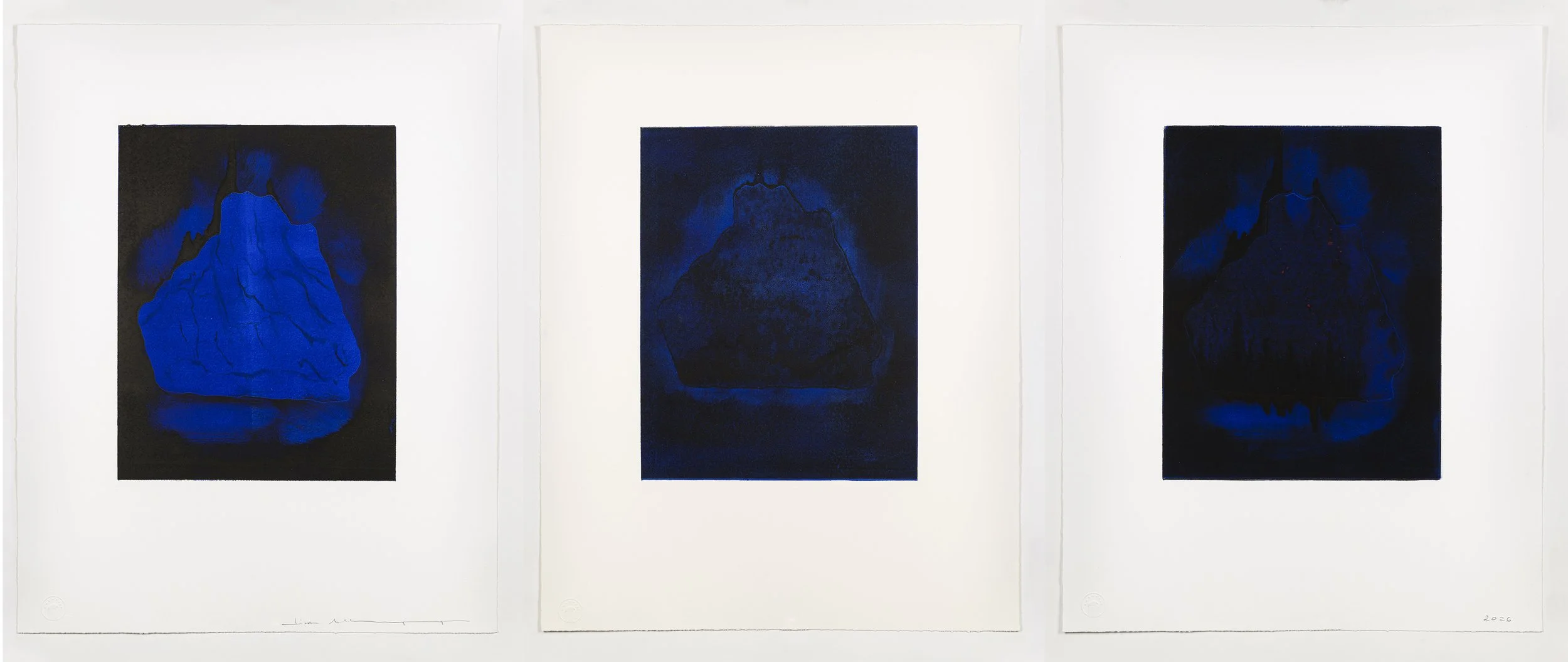
Cosmic Levitation - Retrieval, 2026
Monotype triptych with 24-karat gold leaf and pigment on paper
Image size: 11 x 14 in. (27.9 x 35.6 cm) each sheet
Paper size: 19 x 24 in. (48.3 x 61 cm) each sheet
1 of 1
Published by Farrington Press
$7,000
-
Lita Albuquerque is an internationally renowned multidisciplinary artist and writer. She has developed a visual language that brings the realities of time and space to a human scale, and she is acclaimed for ephemeral and permanent works made in the landscape and in public sites.
Born in Santa Monica, California, she was raised in Tunisia and Paris, and settled in the United States with her family at age eleven. In the 1970s she emerged on the California art scene as part of the Light and Space movement. She won acclaim for poetic, epic pigment pieces created for desert sites, and by the late 1970s she had gained national attention for ephemeral installations in the natural landscape exploring mapping, identity, and the cosmos.
Albuquerque’s work questions our place in infinite space and eternal time. Although science continues to produce new data and theory about the cosmos, its most elemental ideas have yet to become part of everyday culture. Albuquerque is one of the rare artists who has taken on that challenge, bringing the foundations of a living cosmology for the 21st century into public consciousness.
She represented the United States at the Sixth International Cairo Biennale, where she was awarded the top prize. Her honors include a National Science Foundation Artist Grant for Stellar Axis, the first and largest ephemeral artwork created in Antarctica; three NEA Art in Public Places awards; an NEA Individual Fellowship; a Civitella Ranieri Foundation fellowship; the 2019 Laguna Art Museum Wendt Artist of the Year Award; and MOCA’s Distinguished Women in the Arts award.
Recent major exhibitions include the Getty’s Pacific Standard Time Performance and Public Art Festival; 20/20: Accelerando at the USC Fisher Museum of Art; Desert X 2017; the 2018 Art Safiental Biennial in Switzerland; Desert X AlUla 2020 in Saudi Arabia; Light & Space at Copenhagen Contemporary; Lita Albuquerque: Liquid Light, presented by bardoLA at the 59th Venice Biennale (2022); and Groundswell: Women of Land Art at the Nasher Sculpture Center, Dallas. Her work is in the collections of the Metropolitan Museum of Art, the Getty Trust, the Whitney Museum of American Art, LACMA, and MOCA, among others, and the Stellar Axis archive is held by the Nevada Museum of Art, Reno. A dedicated educator, she was on the core faculty of the Graduate Art Program at Art Center College of Design for 35 years.